Resource / Blog
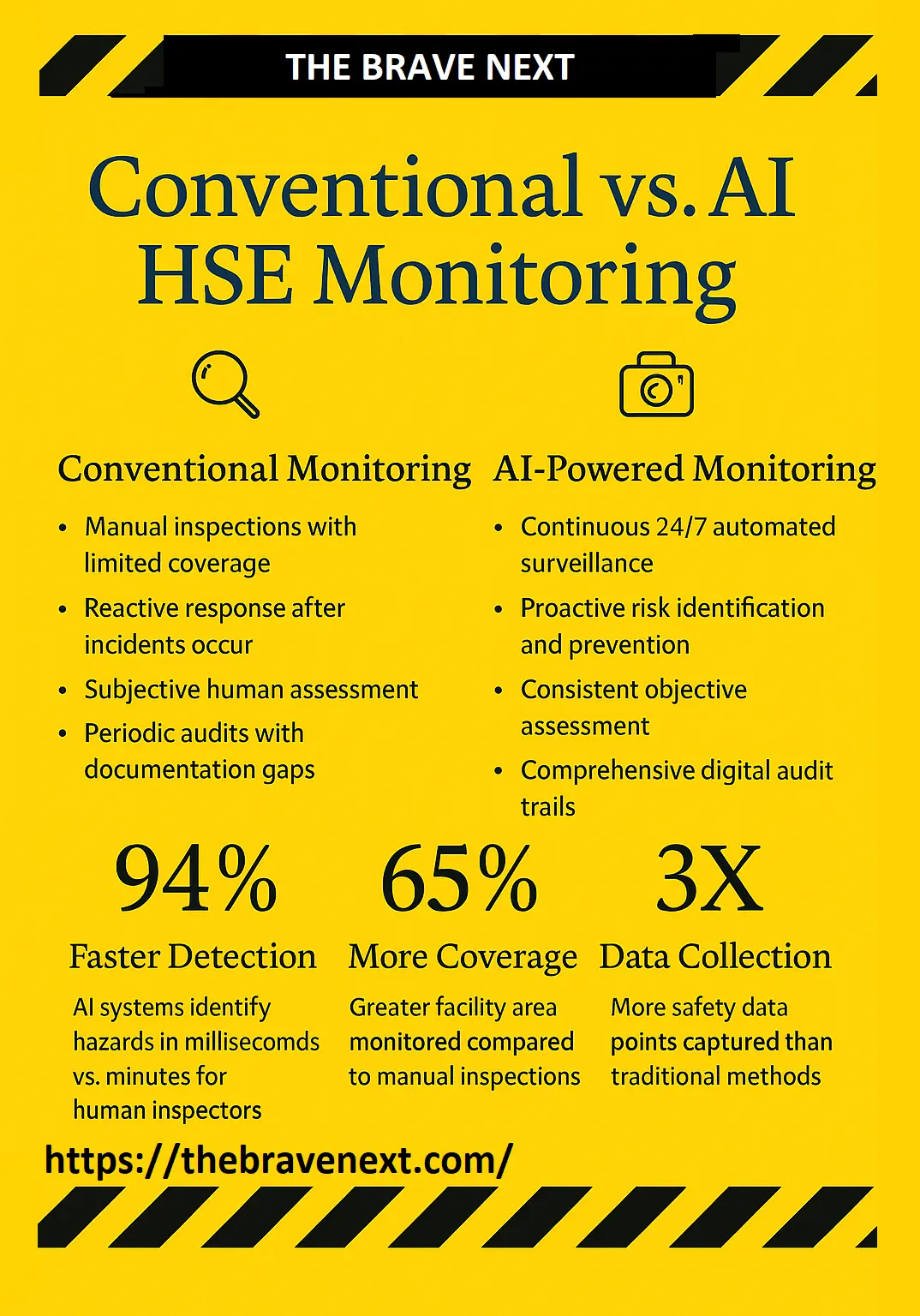
Health, Safety, and Environment (HSE) monitoring is a cornerstone of industrial operations, ensuring compliance, safeguarding workers, and minimizing environmental impact. Traditionally, HSE practices have relied on manual inspections, periodic audits, and reactive safety protocols. However, with the rise of Artificial Intelligence (AI), a new wave of proactive, intelligent, and data-driven safety solutions has emerged. This blog explores the real difference between conventional and AI-powered HSE monitoring — and why the shift might be more important than ever.
Conventional HSE monitoring often depends on human oversight, physical checklists, and routine inspections. While this has worked for decades, it's time-consuming and prone to human error. In contrast, AI-powered systems use sensors, cameras, and machine learning algorithms to continuously monitor environments, detecting issues in real time without manual intervention.
Traditional systems usually respond after incidents happen — making them reactive. AI, on the other hand, predicts risks before they escalate. For example, AI can analyze patterns in equipment vibrations or worker behavior to forecast potential failures or accidents, enabling preemptive action and reducing downtime or injuries.
Human inspectors can't be everywhere all the time. Conventional monitoring is limited to scheduled visits or reported concerns. AI tools offer round-the-clock surveillance through IoT devices, computer vision, and real-time data analytics, ensuring continuous situational awareness with minimal gaps.
Traditional methods often record data sporadically or rely on manual logging. AI systems, however, collect massive volumes of data from multiple sources — wearables, sensors, drones — and analyze it instantly. This enables faster decision-making, trend identification, and deeper safety insights.
Keeping up with regulatory compliance manually is tedious and error-prone. AI tools simplify this process by auto-generating compliance reports, tracking violations, and sending real-time alerts. This reduces paperwork, audit stress, and the chances of non-compliance fines.
Conventional safety practices often follow one-size-fits-all checklists. AI-based platforms can be customized to suit specific industries, locations, or risk profiles. They learn from your operations and evolve over time, offering more relevant and targeted safety solutions.
Traditional monitoring depends heavily on trained personnel who may vary in experience and judgment. AI doesn’t get tired, distracted, or inconsistent. It acts as a reliable assistant to HSE teams, enhancing human performance rather than replacing it.
In emergencies, every second matters. AI-powered systems detect hazards instantly and trigger alerts or shutdowns within milliseconds. This rapid response can prevent accidents, save lives, and protect assets far more effectively than manual procedures.
While setting up AI systems might involve initial investment, traditional methods often incur higher long-term costs due to labor, inefficiencies, and incident fallout. AI improves efficiency, reduces incident rates, and cuts operational costs over time — offering a clear ROI.
Paper-based or spreadsheet reports used in traditional systems are static and often outdated by the time they’re reviewed. AI platforms offer live dashboards with real-time KPIs, heat maps, and trend predictions — enabling managers to make informed decisions instantly.
Our in-depth analysis of AI-driven workplace safety has been featured across respected publishing and industry platforms. You can explore the full article on:
No, AI is designed to support and enhance human efforts, not replace them. It automates routine tasks, offers predictive insights, and enables faster responses, but human judgment and decision-making remain critical for interpreting data and taking context-sensitive actions.
Yes, with the advancement of cloud-based solutions and scalable AI tools, even small and mid-sized businesses can adopt AI at a reasonable cost. Many providers offer flexible pricing models based on the size of operations and features needed.
Industries with high-risk environments such as construction, manufacturing, oil & gas, mining, and logistics gain the most value. However, AI-driven HSE monitoring can benefit any sector aiming to improve safety, compliance, and operational efficiency.

Please send your query or requirements in detail via whatsapp, and we will respond shortly.
Thank you!