Resource / Blog
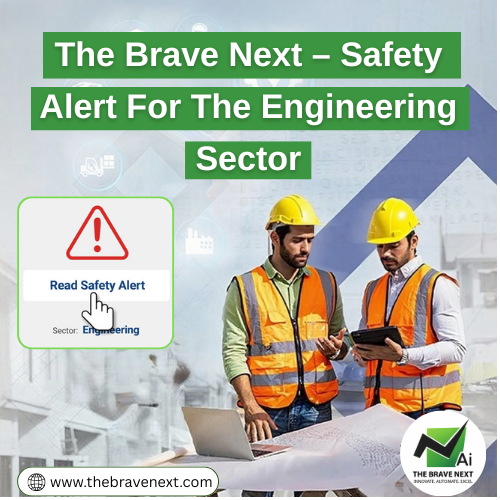
The engineering sector is the backbone of progress, driving infrastructure, innovation, and industry. However, it also carries high risks, where safety challenges can lead to accidents, downtime, and financial loss. With the rise of smart technology and real-time alerts, the way engineers handle safety is evolving. The Brave Next represents a step forward—empowering companies to protect their workforce, minimize risks, and ensure efficiency through timely safety alerts.
Engineering projects involve heavy machinery, complex designs, and high-risk environments. Without safety alerts, small mistakes can escalate into serious hazards.
Safety alerts act as early warning systems, informing engineers about potential risks before they turn into critical problems.
From electrical hazards and equipment failures to structural instability, the engineering field faces diverse safety challenges daily.
AI, IoT, and digital monitoring tools are now key players in detecting risks and sending alerts faster than ever before.
Modern systems track equipment, temperature, pressure, and human activity—sending instant alerts when thresholds are crossed.
Safety alerts reduce reliance on manual checks, minimizing human mistakes and improving overall safety compliance.
Smart helmets, wristbands, and sensors provide live feedback, keeping engineers safe on-site.
Technology is only effective when combined with training and awareness, ensuring every worker values safety.
Fewer accidents mean reduced downtime, lower costs, and improved reputation for engineering companies.
As technology advances, predictive alerts will become standard—helping companies prevent risks before they occur.
Our in-depth analysis of AI-driven workplace safety has been featured across respected publishing and industry platforms. You can explore the full article on:
Safety alerts help prevent accidents by providing early warnings about potential risks. They reduce human error, protect workers, and ensure projects run smoothly without costly delays.
Modern technology like IoT sensors, AI, and real-time monitoring tools allow instant detection of hazards. These innovations provide immediate alerts, enabling quick action and safer work environments.
The future lies in predictive safety systems, where AI analyzes data to forecast risks before they happen. This proactive approach will redefine workplace safety and efficiency.

Please send your query or requirements in detail via whatsapp, and we will respond shortly.
Thank you!