Resource / Blog
In today’s fast-evolving industrial landscape, safety is no longer just about compliance—it’s about innovation. Artificial Intelligence (AI) is revolutionizing how organizations approach Environmental, Health, and Safety (EHS) management. By leveraging AI-powered EHS solutions, industries are not only minimizing risks but also transforming the way they monitor, predict, and prevent workplace incidents. This digital transformation ensures smarter decision-making, enhanced worker safety, and sustainable business growth.
Artificial Intelligence acts as the brain behind modern EHS systems. It processes massive volumes of data from sensors, equipment, and employee feedback to identify potential hazards before they escalate. This predictive capability enables safety teams to take proactive measures rather than reacting after incidents occur.
Predictive analytics uses AI algorithms to forecast potential risks and equipment failures. By analyzing patterns in historical and real-time data, organizations can detect early warning signs of machinery malfunctions, environmental leaks, or unsafe worker behavior—saving time, costs, and lives.
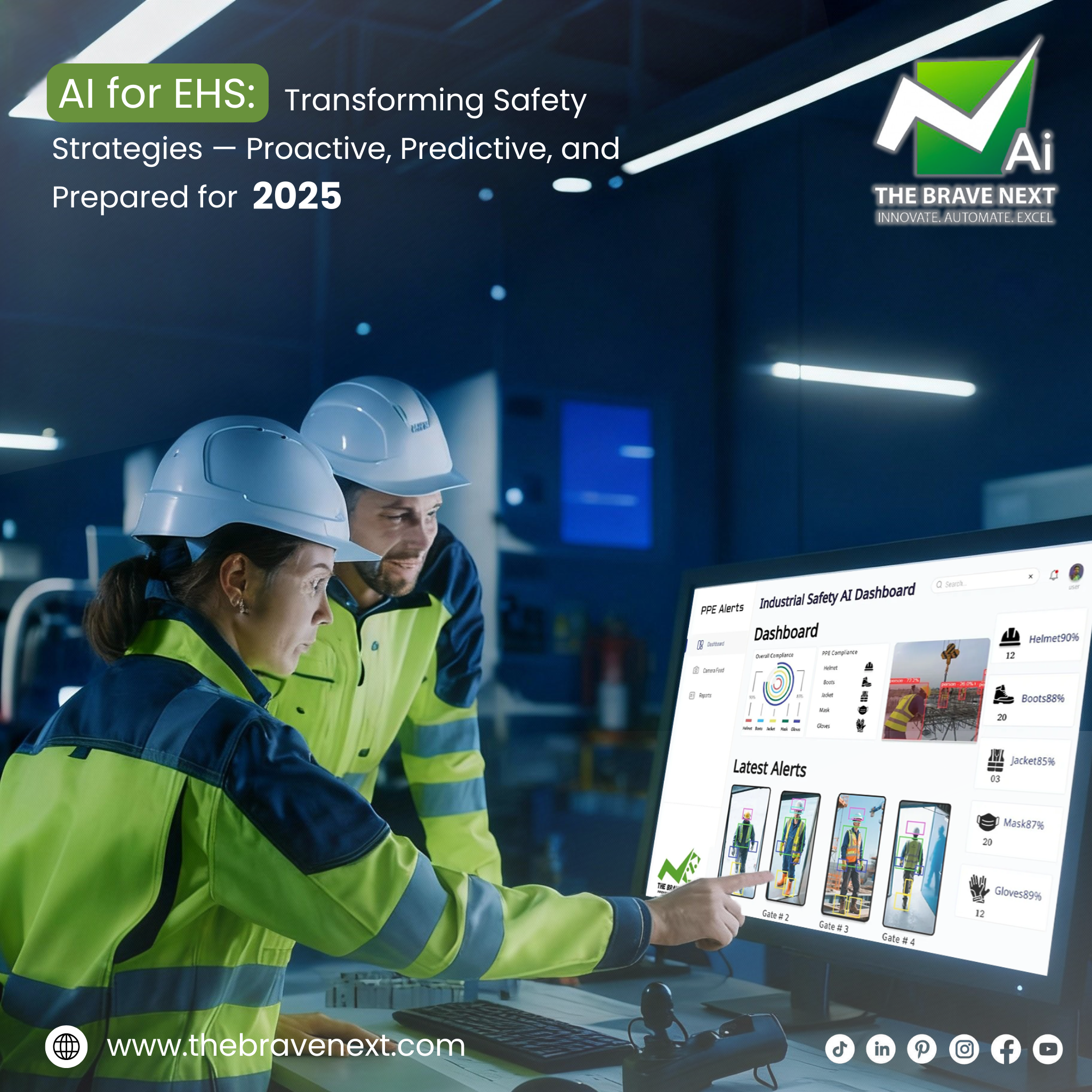
AI-driven EHS platforms provide real-time insights into workplace conditions through IoT sensors and computer vision systems. From detecting unsafe air quality levels to identifying workers without safety gear, these technologies enable instant alerts and immediate corrective actions.
Traditional compliance processes are often time-consuming and error-prone. AI simplifies compliance management by automatically tracking regulatory changes, maintaining digital records, and generating reports. This ensures companies meet safety standards efficiently while reducing administrative workload.
AI-powered wearables are becoming an essential part of industrial safety programs. These devices can track workers’ heart rate, fatigue levels, and exposure to hazardous environments. In case of abnormal readings, supervisors receive instant alerts to intervene quickly and prevent incidents.
Computer vision technology enables AI systems to “see” what’s happening on-site. Cameras equipped with AI can identify unsafe acts—like workers entering restricted areas or forgetting PPE—and trigger immediate notifications to safety officers.
AI tools consolidate safety data from multiple sources and present actionable insights through dashboards. EHS managers can use these insights to make informed decisions, allocate resources effectively, and implement targeted safety improvements.
Modern AI solutions are designed to integrate seamlessly with existing EHS software. This interoperability ensures organizations can enhance their current safety frameworks without replacing entire systems—making digital transformation cost-effective and scalable.
AI not only improves technology but also fosters a culture of safety. By analyzing employee behavior patterns, it helps design better training programs and safety campaigns. This encourages workers to take ownership of their well-being and promotes a proactive safety mindset.
The future of industrial safety lies in AI-driven automation, robotics, and machine learning. As technology evolves, EHS systems will become even more predictive, adaptive, and intelligent—making workplaces safer, more efficient, and environmentally responsible.
Our in-depth analysis of AI-driven workplace safety has been featured across respected publishing and industry platforms. You can explore the full article on:
AI enhances workplace safety by analyzing data from sensors, cameras, and equipment to identify potential hazards in real time. It predicts accidents, monitors worker behavior, and automates safety alerts—helping prevent incidents before they occur.
Yes. Most AI-driven EHS solutions are designed to integrate seamlessly with existing safety platforms, IoT devices, and enterprise systems. This allows organizations to enhance their current safety processes without completely replacing their infrastructure.
The key benefits include predictive risk analysis, automated compliance tracking, faster incident response, improved worker health monitoring, and smarter decision-making through data insights. Overall, AI transforms EHS from a reactive function into a proactive safety strategy.

Please send your query or requirements in detail via whatsapp, and we will respond shortly.
Thank you!